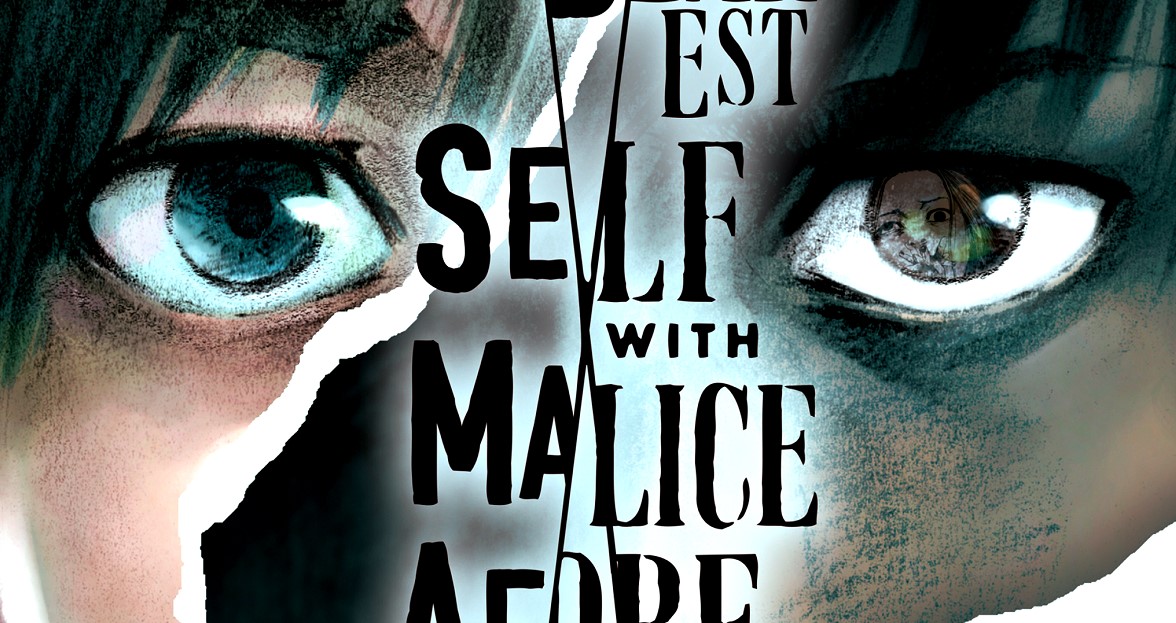





This past year, I have come to grow a deep appreciation of digitally distributed manga. Certainly the appeal of owning a physical book will never be beat, but the digital space does offer a platform for diverse and unexplored talent, allowing unique talent from Japan to be showcased. One such title, the wonderfully named My Dearest Self With Malice Aforethought, was recently release as part of Kodansha Comics digital catalogue. Not even sure what the sequence of words meant, but feeling it sounded ‘dark’ and possibly ‘disturbing’, I decided to take a blind chance and give this one a go. Was it a good call? Or did I regret it?
WHAT IS IT?
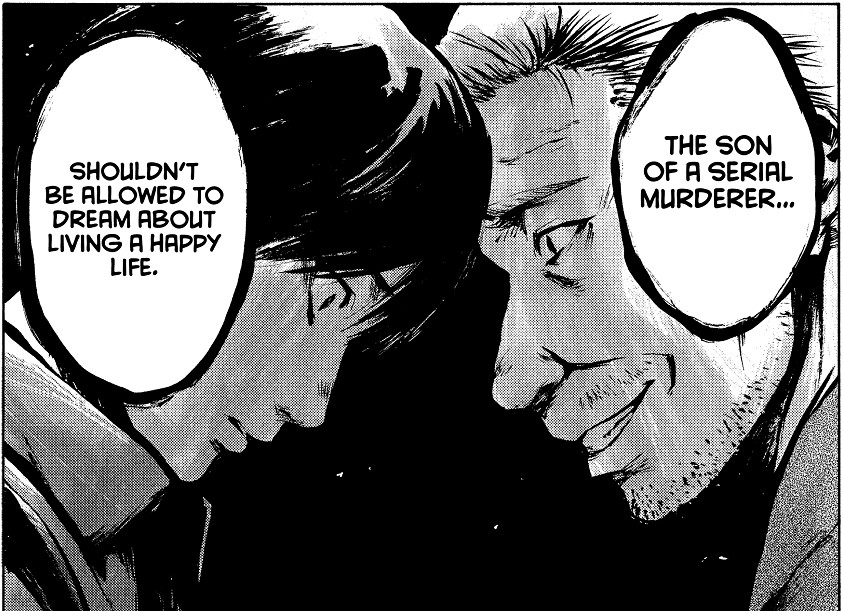
Born the son of a serial killer, Eiji has turned out to be a rather uninspiring individual, lovesick and rather timid in nature. However, after he starts to experience blackouts that last for days an alternative personality emerges, one that gets the girl and does not take any s*** from anyone. At first reason to celebrate, Eiiji learns that his alter ego, B1, may have a taste for extreme violence, theft and even cannibalism. Once Eiji regains control, he begins to investigate his darker half, leading him to actions of deep depravity amongst the dregs of society.
What Did I like About The Manga
Oh my! This one certainly had some jaw dropping twists and turns, unabashedly indulging in disturbing subject matter. However, the shock value is presented in a palatable way that makes it still enjoyable and surrounded in mystery. In practice, watching a panicked Eiji try to figure out what went on during his blackout leaves a lot to the audience imagination. A prime example from volume 1 is when the troubled protagonist feeling ill runs to privacy to only throw up a human ear. It is wonderfully gross but through allows an implied macabre mystery that I absolutely adored.
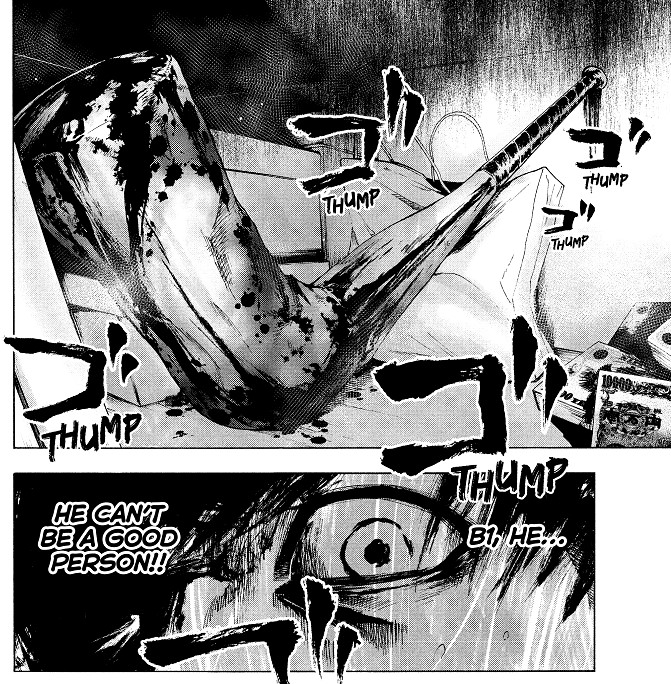
As a result, My Dearest Self becomes a murder mystery wherein the protagonist is actually chasing himself. Not necessarily an original concept, but one which creator Hajime Inoryu handles competently. Throughout Vol. 1, there is a drastic escalation of events, concluding on a squeamishly disturbing cliffhanger.
Complimenting the narrative, Artist Shota Ito has a sharp visual style that captures both horror an beauty, most apparent when looking at his ability to capture female ‘divinity’. Beautiful smiles, and communitive through eyes brimming with emotion, rival the style of stand-out creators’ like Inio Asano and Shuzo Oshimi. Picture those images of smiling faces lit by a white light backdrop, those types of images that make the manga nerds swoon, and you get an idea of Shota Ito’s best moments. The balance of beauty and horror certainly creates a strong contrast when when the smiling face makes way for a badly mangled and tortured corpse. Undeniably, the aesthetic is a key component in making the story flow as well as it does.
What I Did Not Like About It
For me, this work is near perfect touching on all of my interest in horror and manga. However, I will say there is reason to be cautiously optimistic as one misstep could really derail this series.
A minor nitpick, as much as I adore the visual styling of Shota Ito, is that there are a few instances where it falls flat. I would argue that his ability to capture male emotions is lacking as some instances of surprise or shock on the face of Eiji borders on comical. Essentially, there were less than a handful of instances where I felt something did not look good, while being in awe the remainder of the release.
Overall Thoughts
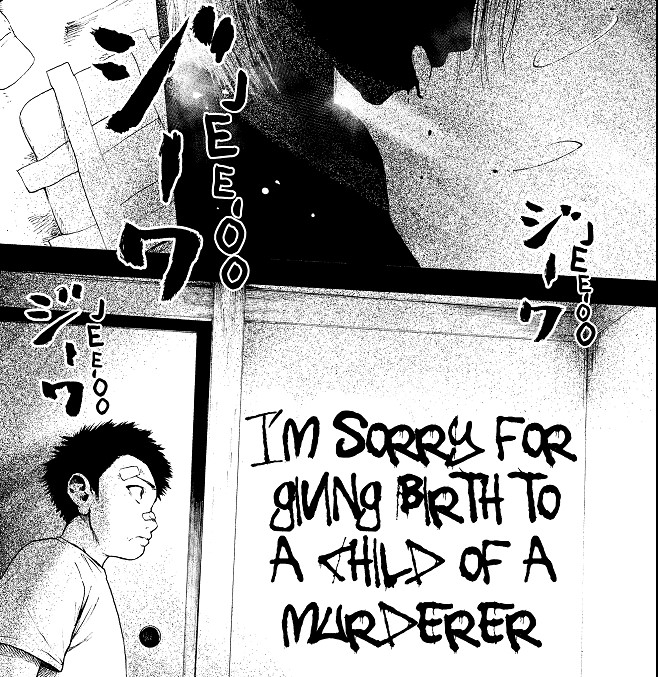
Deliciously dark, My Dearest Self with Malice Afterthought is the kind of psychological horror I really love, a series that does not worry about censoring itself and comfortable to wallow in its disturbing reality. In fact, I am reminded of one of my favorite title of Homunculus in the way the series messes with audience perception and is bolstered by a stunning visual approach. If you like psychological horror, I implore you to give this one a shot.
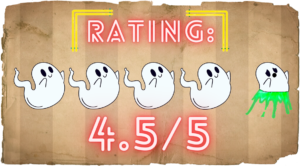
More Manga Reviews:
Sadako at the End of the World balances delicately between a cute slice-of-life story and a new entry into the Ring franchise that holds up as true canon. Featuring supervision… Collecting 10 stories of the macabre from Miyako Cojima, Wonder House of Horrors marks an impressive introduction of the mangaka to the West. Across the varied stories, Cojima distorts the… Trigger warnings for virtually everything, from child ab*se to r*pe, torture, animal ab*se, mutilation, and repeated mentions of c*ck vore. Yes, c*ck vore. And probably whatever you’re thinking, that too…. Junji Ito’s at it again with the suicide-filled creepfest that is the Lovesickness collection, and like all of his work, it is worthy of a manga review. Taking its name… Geungsi is an action thriller graphic novel series, written and illustrated by Singaporean artist Sean Lam. The story currently consists of two main volumes (check out our review of Volume… Horror is a tool. A tool used by the architect in order to design a macabre landscape, layered with mountains of fear and embedded with the riverbanks of mystery. Suehiro…
Sadako at the End of the World Manga Review – Like a Ray of Hope During the Apocalypse
Wonder House of Horrors (2023) Manga Review – So Cute Yet So Horrific
Vitiators (2022) Comic Review: One Hell of a Manga
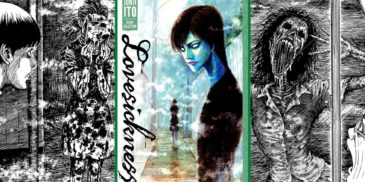
Junji Ito Lovesickness Manga Collection Review
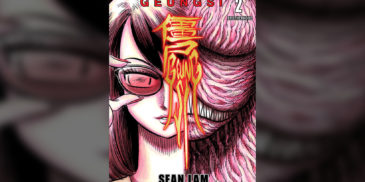
Geungsi Vol. 2: Brotherhood Manga Review – Singaporean Vampire Hunters

Suehiro Marou – Icon of the Modern Erotic Grotesque Scene